
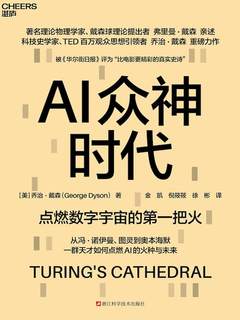
本书远非一部寻常的技术史,而是一场朝向数字文明源头的深邃回溯。它既颠覆了当下技术叙事中常见的功利逻辑,又以史学家的严谨与人文主义者的温度,带领读者重返那个充满哲学野心的创造年代。书中披露的诸多历史细节 —— 例如 MANIAC 计算机既参与氢弹模拟,又同步探索人工生命 —— 揭示出早期科学家如何以代码为语言,试图在数字世界中重构生命、进化乃至意识本身。本书以普林斯顿高等研究院为历史舞台,将冯・诺依曼、图灵、奥本海默等我们耳熟能详的科技巨匠,塑造为数字宇宙的 “创世神祇”,令人清晰地意识到:今天这个智能时代,并非源于冰冷的技术演进,而是一场关乎人类存在意义的伟大冒险。更发人深省的是,作者指出我们如今面临的种种 AI 伦理困境 —— 自主机器的崛起、人机关系的重构 —— 其根源早已深植于数字世界的初始架构之中。这种贯穿时代的 “命运感”,尤其令人震撼。对我而言,全书带来两个尤为深刻的现实启示:其一,是开放与包容的力量。 普林斯顿高等研究院所汇聚的学术精英,大多来自欧洲各国,其中不乏在当时备受歧视的犹太学者。然而美国社会与科研体制却展现出罕见的开放姿态,为他们提供了自由的学术土壤与关键支持。历史证明,这种开放包容绝非单纯的理想主义 —— 它不仅培养了许多美国本土的年轻学者(他们日后也成长为科技巨匠),更间接塑造了延绵至今的国际学术氛围与惯例,并直接催化了美国在二战后的科技飞跃与全球引领,其现实效益深远而显著。其二,是克制与合作的精神。 书中描绘的学者群体并非没有分歧 —— 理论数学家、应用科学家与工程师之间,甚至存在清晰的观念差异与身份区隔。然而在共同的使命面前,他们展现出高度的专业克制与协作精神,携手推进 “Y 计划” 与早期计算机的研发。这种超越个人立场、聚焦共同目标的合作素养,不仅在历史上成就了伟大突破,也对今天身处高度分工社会中的我们,具有深刻的行为参照价值。合上书本,那个根本的追问依然回荡:在机器智能日益逼近甚至超越人类的时代,我们究竟是数字世界的创造者,还是终将被自身造物替代的过渡角色?本书并未给出简易的答案,却赋予我们一副审视技术、历史与自我的透镜 —— 唯有理解起源,方能清醒面对未来。(由之宝与我共创)This book is far from an ordinary history of technology; it is a profound journey back to the origins of digital civilization. It not only subverts the utilitarian logic common in contemporary technological narratives but also, with the rigor of a historian and the warmth of a humanist, guides readers back to that era of creation filled with philosophical ambition. The numerous historical details disclosed in the book—such as the MANIAC computer being used both for hydrogen bomb simulations and for exploring artificial life—reveal how early scientists used code as a language, attempting to reconstruct life, evolution, and even consciousness itself within the digital world.Using the Institute for Advanced Study in Princeton as its historical stage, the book reshapes familiar technological giants like von Neumann, Turing, and Oppenheimer into "creator deities" of the digital universe. This makes one clearly realize that today's intelligent age did not originate from a cold, technical evolution but from a grand adventure concerning the meaning of human existence. Even more thought-provoking is the author's point that the roots of the various AI ethical dilemmas we face today—such as the rise of autonomous machines and the redefinition of human-machine relationships—were already deeply embedded in the initial architecture of the digital world. This sense of "destiny" spanning eras is particularly striking.For me, the book offers two especially profound real-world insights:First, the power of openness and inclusivity. The academic elites gathered at the Institute for Advanced Study mostly came from various European countries, including many Jewish scholars who faced significant discrimination at the time. Yet, American society and its research institutions displayed a rare openness, providing them with a free academic environment and crucial support. History has shown that this openness and inclusivity were far from mere idealism. It not only nurtured many young American scholars (who later became technological giants themselves) but also indirectly shaped the enduring international academic atmosphere and conventions. Furthermore, it directly catalyzed America's technological leap and global leadership after World War II, with profound and significant real-world benefits.Second, the spirit of restraint and cooperation. The community of scholars depicted in the book was not without disagreements—clear ideological differences and professional distinctions even existed among theoretical mathematicians, applied scientists, and engineers. However, in the face of a shared mission, they demonstrated a high degree of professional restraint and a collaborative spirit, working together to advance "Project Y" and the development of early computers. This capacity for cooperation, which transcended individual positions and focused on common goals, not only achieved great breakthroughs in history but also offers profound behavioral reference value for us living in today's highly specialized society.Closing the book, that fundamental question still resonates: in an era where machine intelligence increasingly approaches or even surpasses human capabilities, are we the creators of the digital world, or are we merely transitional beings destined to be replaced by our own creations? The book does not offer a simple answer, but it provides us with a lens through which to examine technology, history, and ourselves—only by understanding our origins can we face the future with clarity.