
哲学与宗教
类型
可以朗读
语音朗读
390千字
字数
2020-12-01
发行日期
展开全部
主编推荐语
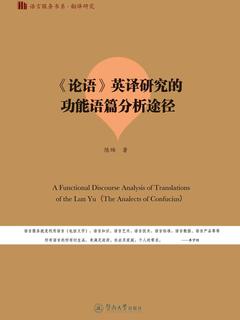
本书用系统功能语言学研究《论语》翻译。
内容简介
本书采用的是功能语篇分析的途径,运用系统功能语言学的理论和方法研究《论语》与其英译文。同时恰当运用韩礼德(M.A.K.Halliday)创建的理论框架探讨翻译文本与其交际功能之间的关系,来实现对识别《论语》及其英文翻译的特征、探讨该翻译文本的译者翻译该文本的目的、探寻适用于像《论语》这样的经典翻译的翻译质量评估方法三方面的有效研究。
目录
- 版权信息
- 序
- 自序
- List of Figures
- List of Tables
- List of Abbreviations
- Chapter 1 Introduction
- 1.1 Introductory Remarks
- 1.2 The Lun Yu Defined
- 1.3 The Commentarial Tradition
- 1.4 Interlingual Translation
- 1.5 Research Background
- 1.6 Theoretical Framework and the Rationale for the Study
- 1.7 Aim, Objectives and Research Questions
- 1.8 Structure of This Book
- Chapter 2 Previous Studies of Translation Within a Functional Framework
- 2.1 Introduction
- 2.2 Important Issues in Translation Studies
- 2.3 SFL Studies of Translation
- 2.4 Functional Discourse Analysis and Translation Studies
- 2.5 SFL and Studies of Translations of the Lun Yu
- 2.6 Concluding Remarks
- Chapter 3 Theoretical Framework
- 3.1 Introduction
- 3.2 SFL—A Theory of Language
- 3.3 Theoretical Assumptions
- 3.4 Text and Context
- 3.5 Context of Situation
- 3.6 Context of Culture
- 3.7 Clause Complex
- 3.8 Concluding Remarks
- Chapter 4 Data and Methodology
- 4.1 Introduction
- 4.2 The Procedural Model
- 4.3 Data:The Lun Yu
- 4.4 Data:English Translations of the Lun Yu
- 4.5 Methodology
- 4.6 Concluding Remarks
- Chapter 5 Characteristics of Quotations in the Lun Yu
- 5.1 Introduction
- 5.2 Quotation vs. Dialogue
- 5.3 Quotation vs. Report
- 5.4 Quotation and Free Quotation
- 5.5 Quotations Revisited
- 5.6 Reporting Clauses
- 5.7 Reporting Verbs
- 5.8 Discussion
- 5.9 Concluding Remarks
- Chapter 6 Characteristics of Dialog ues in the Lun Yu
- 6.1 Introduction
- 6.2 The Nature of Dialogues
- 6.3 Types of Dialogues
- 6.4 Circumstances with Dialogues
- 6.5 Concluding Remarks
- Chapter 7 Descriptions and Narratives
- 7.1 Introduction
- 7.2 Different Text Types
- 7.3 Descriptions and Narratives
- 7.4 Identification of Subject/Actor/Sayer
- 7.5 The Choice of Tense
- 7.6 Waley's Choice of Verb Tense
- 7.7 Cohesion and Coherence
- 7.8 Concluding Remarks
- Chapter 8 A Case Study:Chapter 20 of the Lun Yu
- 8.1 Introduction
- 8.2 Descriptions and Commentaries
- 8.3 The Original Text and Ku's English Translation
- 8.4 Interpretation and Translation
- 8.5 Discussion
- 8.6 Conclusion
- Chapter 9 Discussion
- 9.1 Introduction
- 9.2 Three Text Types
- 9.3 An Example for General Discussion
- 9.4 Cohesion and Coherence
- 9.5 Equivalence
- 9.6 The Target Reader
- 9.7 The Importance of Commentaries
- 9.8 Concluding Remarks
- Chapter 10 Conclusion
- 10.1 Introduction
- 10.2 A Summary of the Previous Chapters
- 10.3 Answers to the Research Questions
- 10.4 Implications
- 10.5 Limitations and Further Studies
- 10.6 Concluding Remarks
- References
- Appendix
展开全部
出版方
暨南大学出版社
暨南大学出版社为“侨”而生,因“侨”而兴,砥砺卅五载,春华秋实,书香五洲,声教四海。始立以来,以“侨”为“桥”,厚植文化,秉承推动华文教育、服务教学科研、传承传播中华优秀传统文化的出版理念,着力华文教材、华侨华人研究、岭南文化研究、高校学术研究成果的出版,已累计出版各类图书7000余种,《中文》《汉语》等华文教材发行海外80多个国家和地区。


