
语言与文字
类型
可以朗读
语音朗读
309千字
字数
2022-03-01
发行日期
展开全部
主编推荐语
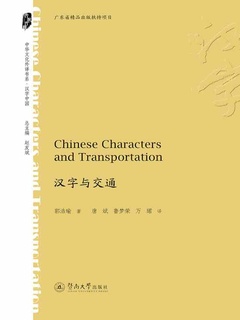
本书是《汉字与交通》的英译版本。
内容简介
原中文书以简单明晰,通俗易懂为出发点,从说“步行”、说“舟船”、说“车马”、说“道路”、说“邮驿”等方面,对相关汉字的字音、字形、字义及文化蕴意等进行了系统解析,以期窥探古代交通对汉字的影响,挖掘汉字中蕴含的古代交通化信息,展现我国古代交通的基本面貌。
书中穿插介绍了相关古代史料及典故,用现代汉语对大部分文献用例进行了翻译,并配以古文字字形和精美图片,力求做到深入浅出,图文并茂,雅俗共赏,集趣味性、科学性、知识性于一体。
目录
- 版权信息
- Preface
- Foreword
- Chapter 1 On“Walking”
- 1.1 To Keep Peace and Order without Weapon and War Is Truly Military: The Original Meaning of“止”
- 1.2 Road under Foot: Chinese Characters with the Radicals“止”and“足”
- 1.2.1 The Chinese Characters with the Radicals“止”and“走”
- 1.2.2 “足”and“脚”
- 1.2.3 “行”,“来”and“去”
- 1.2.4 Traveling
- 1.3 Misfortunes of Feet
- 1.3.1 The Punishment of Cutting Off One's Foot
- 1.3.2 “膑”,“瘸”,“跛”and“蹇”
- 1.3.3 Feetbinding and Wrapping One's Feet
- 1.3.4 Being Grounded
- Chapter 2 On“Boat”
- 2.1 Living along the Water: Forefathers'Life over the Riverside
- 2.2 Taking the Raft through Waves: The Invention of Boat
- 2.2.1 Crossing the River by Boat
- 2.2.2 Floating Raft Traveling between Heaven and Earth
- 2.2.3 The Raft Drifting along the Rapids
- 2.3 Different Boats from North to South in China: Types of Boat
- 2.3.1 “舫”,“舸”,“艖”and“舠”
- 2.3.2 “艨艟”,“楼船”and“舴艋”
- 2.3.3 “葫芦”,“芦苇”and“舟梁”
- 2.4 Lifting the Sail and Rowing the Boat with Oars: The Components of Boat
- 2.4.1 Rudder and Oars, Redolent of Cassia and Orchids
- 2.4.2 Tapping the Gunwale while Singing
- 2.4.3 Stretching Sails Hanging High in Soft Breeze
- 2.4.4 Sleeping under the Awning along the River at Autumn Night
- 2.4.5 Connected Boats Extending over a Thousand Miles
- Chapter 3 On“Carriage”
- 3.1 Identifying People's Status by Carriage
- 3.1.1 Getting the Carriage by Sword Dance
- 3.1.2 Different Classes of the Carriage
- 3.1.3 The Lu Carriage
- 3.1.4 The Xuan Carriage
- 3.1.5 The Yao Carriage
- 3.1.6 The Zi Carriage
- 3.1.7 Burial Objects
- 3.2 Making the Way by Vanguards
- 3.3 The Components of Carriage
- 3.3.1 “舆”
- 3.3.2 “轼”
- 3.3.3 “辕”
- 3.3.4 “轮”
- 3.3.5 “轴”
- 3.3.6 “盖”
- 3.4 Unified Distance between the Wheels for All Carriages
- 3.5 The Configuration of Carriage and Horse
- 3.5.1 “骈”,“骖”,“驷”and“六驾”
- 3.5.2 左骖(The Horse on the Left)
- 3.5.3 驸马(The Side Horse)
- 3.5.4 介马
- 3.6 Flogging and Cracking
- 3.6.1 Flogging
- 3.6.2 Cracking
- 3.7 Seating Arrangements in the Carriage
- 3.8 Other Types of Carriage
- 3.8.1 Sedan Chair(舆轿)
- 3.8.2 Elephant Carriage(象车)
- 3.8.3 Pole Dolly(鹿车)
- 3.9 Wearing the Dress of Hu People and Shooting on Horse
- 3.10 The Classification of Horse
- 3.10.1 The Age of Horse
- 3.10.2 The Color of Horse
- 3.10.3 The Size of Horse
- 3.10.4 The Grade of Horse
- Chapter 4 On“Road”
- 4.1 The Name of Road
- 4.2 Branches of Road
- 4.2.1 “行”and“道”
- 4.2.2 “衢”and“逵”
- 4.2.3 “歧”and“岔”
- 4.3 Winding Paths to Secluded Places
- 4.4 Roads in Lanes
- 4.5 Crisscrossed Footpaths among Fields
- 4.6 Changing a Deep Chasm into a Thoroughfare
- 4.6.1 Water(途)
- 4.6.2 Bridge(桥梁)
- 4.6.3 Plank Road
- 4.7 Crisscrossed Waterways
- 4.7.1 “沟”,“渠”,“渎”,“洫”and“池”
- 4.7.2 Rags and Chopsticks
- References
展开全部
出版方
暨南大学出版社
暨南大学出版社为“侨”而生,因“侨”而兴,砥砺卅五载,春华秋实,书香五洲,声教四海。始立以来,以“侨”为“桥”,厚植文化,秉承推动华文教育、服务教学科研、传承传播中华优秀传统文化的出版理念,着力华文教材、华侨华人研究、岭南文化研究、高校学术研究成果的出版,已累计出版各类图书7000余种,《中文》《汉语》等华文教材发行海外80多个国家和地区。


